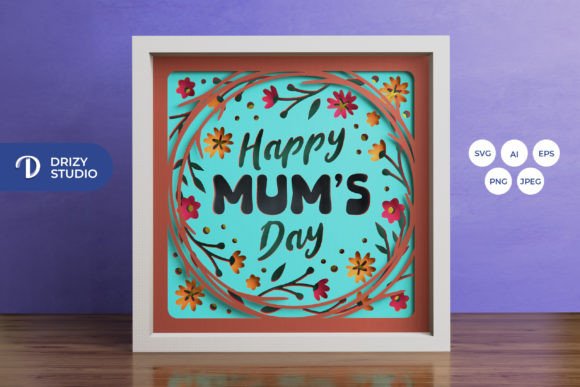
Happy Mum’s Day 3D SVG Review for Real Projects
Real-Life Use Cases: Where This Design Shines
Custom Tote Bags: One of my favorite uses for this kind of layered design is on tote bags. The square format fits neatly on a canvas-style bag, especially if you place it near the top handle area. The 3D effect gives it a pop of dimensionality, making the gift feel more premium.
Sweatshirt Embroidery: For soft goods like hoodies or sweatshirts, the design brings a subtle yet impactful touch. Because it's not overly intricate, it won’t lose clarity when scaled up slightly for larger garments. The layered look also complements the cozy, handmade vibe of such items.
Baby Clothes and Nursery Décor: The gentle curves and non-contrasting color scheme make this a great fit for baby-related embroidery. You could use it on onesies or even pillow covers for a nursery. Just keep the thread colors soft and consider using satin stitch for the outlines to maintain its delicate charm.
Embroidered Patches and Aprons: If you're an Etsy seller or craft fair vendor, this design could easily become an embroidered patch or part of a line of aprons. The clear boundaries and minimal fill areas mean less risk of fraying or distortion, especially on woven cotton fabrics commonly used in these products.
Where Caution Is Needed: Avoiding Common Pitfalls
- Small hoop sizes: The design’s layered nature means it may require a bit more space than a typical flat SVG. Scaling down too much can compromise the stitch clarity, especially in the finer details around the text.
- Textured or stretchy fabrics: These can distort the delicate lines of the design. Stick to stable, medium-weight materials like quilting cotton or felt for best results.
- Curved surfaces (like caps): The square format doesn't adapt well to curved surfaces. Unless you’re willing to reshape the design manually, avoid using it on hats or other round items.
- Dark fabric backgrounds: Since the design relies on contrast, it might not show up as intended on darker materials. Test it with light-colored threads first or consider using metallics for visibility.
- Dense stitch areas: Some parts of the design may have tighter stitching, so it's important to check how they interact with the fabric. Too much pressure or incorrect stabilizer use could lead to puckering.
Visual Appeal and Project Value
For Etsy sellers and digital product creators, this design can enhance the presentation of printable mockups or digital previews. Its structured appearance ensures it looks polished across different platforms and lighting conditions, which is crucial for buyer engagement.Designer Notes: Practical Tips Before Stitching
- Test on scrap fabric: Always try the design on a piece of leftover material before committing to a final product. This helps catch any issues with stitch flow or tension early on.
- Check thread color contrast: Choose thread colors that complement the fabric but still provide enough visibility. Pastels work well for soft tones, while bold colors can make the design stand out more on neutral backgrounds.
- Review stitch density: Look closely at how tight or loose the stitches are. Adjust settings if necessary to prevent over-stitching or gaps, particularly in the fill areas.
- Confirm hoop size: If the file requires a specific hoop size, ensure your hoop can accommodate it. Otherwise, scale the design appropriately and test again.
- Inspect small details: The corners and inner shapes need close attention. Make sure your machine can handle them without skipping stitches or distorting the pattern.
- Use proper stabilizer: Depending on your fabric choice, select a stabilizer that prevents shifting and supports the design’s structure without leaving residue.
- Verify licensing: If you plan to sell finished items or digital files, double-check the licensing terms of the design. Many 3D SVGs come with restrictions that must be respected to stay compliant.