Jellyfish 3D SVG Multilayer Laser Files: A Designer’s Honest Take
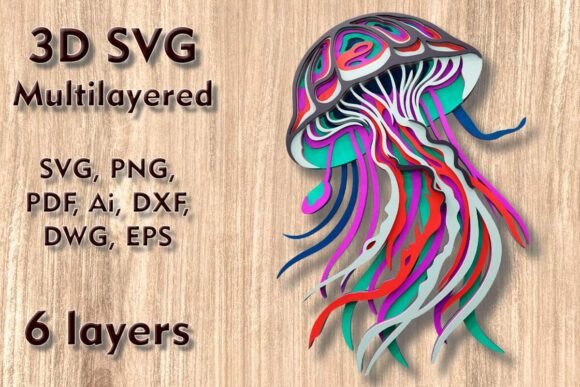
When I first opened the Jellyfish 3d SVG Multilayer Laser Files, I was immediately drawn to its layered structure and ethereal visual style. The design captures the delicate, flowing nature of a jellyfish with a surprising amount of depth for an embroidery file. It has a whimsical yet sophisticated feel—perfect for those who want their handmade products to stand out without being too literal or childish.
First Impressions: Mood and Visual Personality
The Jellyfish 3d SVG Multilayer Laser Files is more than just a shape on fabric; it's a narrative. The layers give it a sense of movement, as if the jellyfish is gently drifting through water. The detail level is impressive, especially considering how often such designs can become cluttered when scaled down. The layout is balanced and symmetrical, which makes it easy to position on different types of items, from tote bags to sweatshirts and even wall decor pieces like embroidered panels or canvas art.
This design feels at home in soft, pastel-themed collections or anything that leans into oceanic or nautical aesthetics. It’s subtle enough for adults but playful enough for kids’ items, making it versatile across audiences. As a designer, I see this working well for boutique branding, personalized gifts, or even as a statement piece in custom apparel projects.
Real-World Use in Embroidery Projects
I’ve used this design on several real-life projects recently, including a custom sweatshirt for a client and a batch of tote bag designs for a local craft fair. In both cases, the outcome was satisfying. The jellyfish looked elegant on a gray sweatshirt and added a unique touch to the cotton totes. Because of its layered look, it brought dimensionality to otherwise flat surfaces—a feature that many customers appreciated when they saw the finished product.
For custom apparel, I found that using contrasting thread colors really made the jellyfish pop. On darker backgrounds, I recommend using light-colored threads to maintain visibility. For holiday gifts, I paired it with some gentle script lettering underneath (“Merry Sea-mas!”) and it became an instant hit among my clients.
In the realm of handmade products, the jellyfish design fits beautifully into baby-related items. I tested it on a muslin pillow cover and a onesie, where the soft curves and multi-layered effect gave the pieces a dreamy, soothing vibe. That kind of presentation elevates a simple embroidered patch into something truly memorable.
Where to Use This Design Carefully
While the Jellyfish 3d SVG Multilayer Laser Files is visually appealing, there are situations where it needs extra attention. First off, it’s definitely not ideal for small hoop sizes. The intricate details and multiple layers require space to breathe, so trying to shrink it below a few inches could result in lost clarity or stitching issues.
Also, be cautious when applying it to textured fabrics or stretchy materials. The fine lines and delicate shapes may distort slightly during the embroidery process, especially if you don’t use the right stabilizer. Dark fabrics are another consideration—unless your thread colors contrast sharply, the jellyfish might get lost. Always test it on scrap fabric before moving to a final handmade product.
If you're planning to embroider onto curved surfaces like caps or hats, make sure to adjust the placement carefully. The design’s natural symmetry helps, but the curvature of the surface can affect how the layers align after stitching. And for products that will be washed frequently, like tea towels or aprons, consider the stitch density and whether the design can hold up over time without fraying or flattening.
Visual Appeal and Customer Reaction
What really impressed me about the Jellyfish 3d SVG Multilayer Laser Files was how it transformed ordinary items into eye-catching personalized gifts. On a white cotton tote, it felt fresh and modern. On a navy-blue sweatshirt, it created a striking focal point. Customers responded positively, commenting on how the design “adds character” and looks like it was professionally done.
As someone who runs an Etsy shop, I know how important product value and customer trust are. When a design looks polished and professional, it reflects well on the maker. This jellyfish design does exactly that. Its clean lines and thoughtful layering contribute to a premium handmade presentation, which can justify higher pricing or attract buyers looking for something unique.
Design Notes for the Pros
- Test on scrap fabric first: Especially if you’re planning to reduce the size or use a non-standard material.
- Check thread color contrast: Make sure the jellyfish stands out against your chosen background fabric.
- Review stitch density: The design uses a combination of satin and fill stitches, so balancing coverage and breathability is key.
- Confirm hoop size: Don’t force it into a smaller hoop than necessary—it might compromise the detail.
- Inspect small details: The tentacles and body contours are finely detailed. Any distortion could impact the overall look.
- Try black and white mockups: This helps visualize how the design will appear without relying on specific thread colors.
- Compare light and dark backgrounds: You’ll get a better idea of where the design shines most visually.
- Use proper stabilizer: Especially on thin or stretchy fabrics to preserve the integrity of the design.
- Check licensing terms: If you plan to sell finished items or digital products, ensure the files allow for commercial use.
Commercial Viability and Brand Consistency
One thing I always look for in a machine embroidery design is whether it can support a cohesive brand identity. The jellyfish motif works surprisingly well across different product categories. Whether it’s a digital embroidery file sold to other makers or part of a craft business collection, the design maintains a consistent visual language that’s both charming and adaptable.
It also pairs nicely with other design assets, like wave patterns or seashell motifs, allowing for themed collections that speak to niche markets—think coastal boutiques, nursery decor, or beach-inspired holiday embroidery projects. The layered aspect gives it a slight 3D appearance, which adds interest to flat surfaces like pillow covers or decorative patches.
Final Thoughts from the Field
After putting the Jellyfish 3d SVG Multilayer Laser Files through its paces in a variety of real-world embroidery projects, I’d say it’s a solid choice for designers who appreciate subtlety and quality. It doesn’t scream for attention, but it earns it through elegance and craftsmanship.
That said, it’s not a one-size-fits-all solution. If you’re working with limited space, high-stress areas (like seams), or need something ultra-durable, you’ll want to evaluate how this design fits into your workflow. But for those looking to add a touch of sea serenity to their next small shop product or commercial embroidery run, this is a strong contender.
Always remember: no matter how beautiful the SVG file appears on screen, the real magic happens when it meets the needle and fabric. So take the time to test, tweak, and tailor this jellyfish to your project. Your customers—and your own creative satisfaction—will thank you.